Showing posts with label Commonly Confused Expressions. Show all posts

Friday, September 11, 2020

New Blog Post by Paul Brians + phantom/fathom

phantom/fathom
Brianna exclaims confusedly, “I can’t phantom why he thought I’d want a coupon for an oil change for Valentine’s Day!” A phantom is a ghost, but a fathom is a nautical measure of depth. When you can’t understand something—being unable to get to the bottom of it—you should say, “I can’t fathom it.” “Phantom” is not a verb. 

 
________________________________

Paul Brians’ most recent blog post discusses “ghosting” through the ages. Does Paul have other interests besides English usage? Of course! He’s also an authority on the history of American comic strips.
________________________________

https://commonerrorspodcast.wordpress.com/

The podcast is just a ghost by now, but you may still listen to all the episodes you may have missed. Episodes 40 and 41 are about American comic strips.

Monday, July 15, 2019

Summer Sale on Books + gauge/gouge

gauge/gouge
“Gauge” is an unusual spelling in English, and the word frequently gets misspelled. Your spelling-checker will catch “gague” (believe it!), but won’t catch “gouge,” which occurs more often than you might think. It’s pretty easy to find a “tire pressure gouge” for sale on the Web. If the word you want has an A sound in it, the spelling you want is “gauge.”


________________________________

Two books on sale through the end of August—just $12 for Common Errors in English Usage and $17 for Far from the Madding Gerund:

   https://wmjasco.com/william-james-co/55-far-from-the-madding-gerund-9781590280553.html 
 ________________________________

https://commonerrorspodcast.wordpress.com/
We bid farewell to the podcast some time ago, but you may still listen to all the episodes you may have missed.

Tuesday, December 18, 2018

Book Sale Continues + translucent/transparent/opaque + New Blog Post by Paul Brians

translucent/transparent/opaque 
Although technically anything that light can shine through is translucent, most writers now reserve this word for substances that don’t clearly display what is on the other side. A frosted window-pane, a thin rice-paper screen, or a sheet of tissue paper may be called “translucent.” A clear window or camera lens is transparent. “Sheer” fabric can be either translucent or transparent. Better check before you go out in public.

“Opaque” is the opposite of “translucent.” Anything solid through which light cannot pass is opaque.


________________________________

Paul Brians’ latest blog post sheds some light on a fascinating book by Alan Moore.
 ________________________________

Two books on sale this month, $15 each with free shipping:

   https://wmjasco.com/william-james-co/55-far-from-the-madding-gerund-9781590280553.html 
 ________________________________

https://commonerrorspodcast.wordpress.com/

We bid farewell to the podcast some time ago, but if you could use more light these days, you might want to listen to “The Solstice and Celestial Terms.”

Wednesday, November 28, 2018

Book Sale Continues! Also, the Latest Blog Post from Paul Brians + A Couple of Favorites

Paul Brians’ Common Errors in English Usage is on sale through the end of the year—just $15 with free domestic shipping (US). Looking for something a little different? Far from the Madding Gerund is also on sale through the year’s end.

Here are a couple of old favorites from Common Errors in English Usage:

tender hooks/tenterhooks A “tenter” is a canvas-stretcher, and to be “on tenterhooks” means to be as tense with anticipation as a canvas stretched on one.


dolly/handcart
A dolly is a flat platform with wheels on it, often used to make heavy objects mobile or by an auto mechanic lying on one under a car body. Many people mistakenly use this word to designate the vertically oriented, two-wheeled device with upright handles and horizontal lip. This latter device is more properly called a “handcart” or “hand truck.”

 
__________________________

Paul Brians’ most recent blog post takes a whack at “hack.”
__________________________

https://commonerrorspodcast.wordpress.com/
We bid farewell to the podcast some time ago, but we discussed today’s featured cartoons in Episode 114.

Wednesday, November 14, 2018

Book Sale! Also, the Latest Blog Post from Paul Brians + A Couple of Favorites

Paul Brians’ Common Errors in English Usage is on sale through the end of the year—just $15 with free domestic shipping (US). Looking for something a little different? Far from the Madding Gerund is also on sale through the year’s end.

Here are a couple of old favorites from Common Errors in English Usage:

dieties/deities
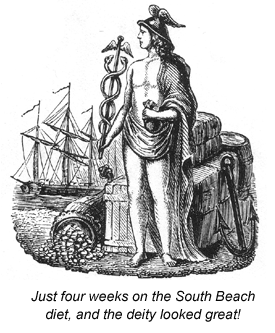
This one is always good for a laugh. The gods are deities, after the Latin deus, meaning “god.”


scone/sconce
If you fling a jam-covered biscuit at the wall and it sticks, the result may be a “wall scone”; but if you are describing a wall-mounted light fixture, the word you want is sconce.


__________________________

Paul Brians’ most recent blog post muses on various uses for “mac.”
__________________________

https://commonerrorspodcast.wordpress.com/
We bid farewell to the podcast some time ago, but we discussed today’s featured cartoons in Episode 113: Giving Thanks for the Book.

Thursday, September 6, 2018

Paul Brians Two Recent Blog Posts + raise/raze

raise/raze 
To raze a building is to demolish it so thoroughly that it looks like it’s been scraped right off the ground with a razor. To raise a building is just the opposite: to erect it from the ground up.


__________________________

Two recent blog posts by Paul Brians address “rails and walls” and an interesting fact about a suffix in two forms.

https://commonerrorspodcast.wordpress.com/

We bid farewell to the podcast some time ago, but several episodes, starting with Episode 105: Government and Politics—More Than Just Words, covered the language of politics.

Wednesday, February 7, 2018

This Week: Paul Brians' Latest Blog Post is The Bomb + defuse/diffuse

defuse/diffuse
You defuse a dangerous situation by treating it like a bomb and removing its fuse; to diffuse, in contrast, is to spread something out: “Bob’s cheap cologne diffused throughout the room, wrecking the wine-tasting.”


____________ 

Paul Brians' latest blog post goes over bombs, real and metaphorical.

https://commonerrorspodcast.wordpress.com/

We’re switching the podcast to a monthly show. We’ll return with episodes that feature guests and special segments, but in the meantime we invite you to peruse the archives.

Wednesday, January 24, 2018

This Week: A Gluten-Free Podcast + feint/faint

feint/faint
A feint, whether in chess or on the battlefield, is a maneuver designed to divert the opponent’s attention from the real center of attack. A feint is a daring move. Do not use this very specialized word in the expression “faint of heart” (or “faint at heart”), which implies timidity.


____________ 

https://commonerrorspodcast.wordpress.com/

On the podcast this week, we discuss medical terms, including EKGs, MRIs, CAT scans, and more.

Wednesday, January 17, 2018

This Week: Refills, Emergencies & More on the Podcast + Paul Brians' latest blog post + taunt/taut/tout

taunt/taut/tout
I am told that medical personnel often mistakenly refer to a patient’s abdomen as “taunt” rather than the correct “taut.” “Taunt” (“tease” or “mock”) can be a verb or noun, but never an adjective. “Taut” means “tight, distended,” and is always an adjective. “Taut” is also occasionally misspelled “taught.”

Don’t confuse “taunt” with “tout,” which means “promote,” as in “Senator Bilgewater has been touted as a Presidential candidate.” You tout somebody you admire and taunt someone that you don’t.


____________ 

https://commonerrorspodcast.wordpress.com/

On the podcast this week, we pick up on our discussion of terms related to politics and government. 

Paul Brians talks about Donald Duck and translating interjections in his latest blog post.

Buy the book!

Wednesday, January 10, 2018

This Week: Crusades, Demagogues, Stump Speeches & More on the Podcast + vapid/vacuous

vapid/vacuous
“Vapid” is used to describe something flavorless, weak, flat. Many people confuse this word with “vacuous,” which describes things which are unintelligent, lacking serious content. A boring speech may be vapid even though it’s learned, and a lively speech may be vacuous even though it’s exciting. A dull person may be vapid, but it is not standard usage to refer to a person as vacuous—only their speech, thoughts, etc., can be so described. To avoid the most common error involving these words, just remember that something vapid isn’t stupid, it’s bland.


____________ 

https://commonerrorspodcast.wordpress.com/

On the podcast this week, we pick up on our discussion of terms related to politics and government.

Buy the book!

Wednesday, November 29, 2017

This Week: Book Sale Continues! Plus, Thanksgiving Leftovers on the Podcast + dolly/handcart

dolly/handcart
A dolly is a flat platform with wheels on it, often used to make heavy objects mobile or by an auto mechanic lying on one under a car body. Many people mistakenly use this word to designate the vertically oriented, two-wheeled device with upright handles and horizontal lip. This latter device is more properly called a “handcart” or “hand truck.”


____________ 

https://commonerrorspodcast.wordpress.com/

On the podcast this week, we pick up from last week and serve some Thanksgiving leftovers, including “dolly/handcart,” “duck tape/duct tape,” “between you and me,” and many more entries and cartoons from the book.

Wednesday, November 15, 2017

This Week: Book Sale! Plus, More on the Language of Politics on the Podcast + reactionary/reactive

reactionary/reactive
Many people incorrectly use “reactionary” to mean “acting in response to some outside stimulus.” That’s “reactive.” “Reactionary” actually has a very narrow meaning; it is a noun or adjective describing a form of looking backward that goes beyond conservatism (wanting to prevent change and maintain present conditions) to reaction—wanting to recreate a lost past. The advocates of restoring Czarist rule in Russia are reactionaries. While we’re on the subject, the term “proactive” formed by analogy with “reactive” seems superfluous to many of us. Use “active,” “assertive,” or “positive” whenever you can instead.


____________ 

Wednesday, October 18, 2017

This Week: Book Sale! Plus, More on the Language of Politics on the Podcast + oppress/repress

oppress/repress
Dictators commonly oppress their citizens and repress dissent, but these words don’t mean exactly the same thing. “Repress” just means “keep under control.” Sometimes repression is a good thing: “During the job interview, repress the temptation to tell Mr. Brown that he has toilet paper stuck to his shoe.” Oppression is always bad, and implies serious persecution.


____________ 

Wednesday, August 16, 2017

This Week: The Language of Health Care on the Podcast + anecdote/antidote

anecdote/antidote
A humorist relates “anecdotes.” The doctor prescribes “antidotes” for children who have swallowed poison. Laughter may be the best medicine, but that’s no reason to confuse these two with each other.

 
 ____________ 

https://commonerrorspodcast.wordpress.com/

On the podcast this week, we discuss health care terms.

Wednesday, August 2, 2017

This Week: More Stupid Adjectives on the Podcast + gull/gall

gull/gall
“How could you have the nerve, the chutzpah, the effrontery, the unmitigated gall to claim you didn’t cheat because it was your girlfriend who copied from the Web when she wrote your paper for you?”

This sense of “gall” has nothing to do with seabirds, so don’t say “How could you have the gull?”


____________ 

Wednesday, June 21, 2017

This Week: Reviving "When Is a Rose Not a Rose?" on the Podcast + parallel/symbol

parallel/symbol
Beginning literature students often write sentences like this: “He uses the rose as a parallel for her beauty” when they mean “a symbol of her beauty.” If you are taking a literature class, it’s good to master the distinctions between several terms relating to symbolism. An eagle clutching a bundle of arrows and an olive branch is a symbol of the US government in war and peace.

Students often misuse the word “analogy” in the same way. An analogy has to be specifically spelled out by the writer, not simply referred to: “My mother’s attempts to find her keys in the morning were like early expeditions to the South Pole: prolonged and mostly futile.”

A metaphor is a kind of symbolism common in literature. When Shakespeare writes “That time of year thou mayst in me behold/When yellow leaves, or none, or few, do hang/Upon those boughs which shake against the cold” he is comparing his aging self to a tree in late autumn, perhaps even specifically suggesting that he is going bald by referring to the tree shedding its leaves. This autumnal tree is a metaphor for the human aging process.

A simile resembles a metaphor except that “like” or “as” or something similar is used to make the comparison explicitly. Byron admires a dark-haired woman by saying of her, “She walks in beauty, like the night/Of cloudless climes and starry skies.” Her darkness is said to be like that of the night.

An allegory is a symbolic narrative in which characters may stand for abstract ideas, and the story conveys a philosophy. Allegories are no longer popular, but the most commonly read one in school is Dante’s Divine Comedy in which the poet Virgil is a symbol for human wisdom, Dante’s beloved Beatrice is a symbol of divine grace, and the whole poem tries to teach the reader how to avoid damnation. Aslan in C. S. Lewis’ Narnia tales is an allegorical figure meant to symbolize Christ: dying to save others and rising again (aslan is Turkish for “lion”).


____________ 

Wednesday, June 14, 2017

This Week: Reviving "Steam" on the Podcast + ancestor/descendant

ancestor/descendant
When Albus Dumbledore said that Lord Voldemort was “the last remaining ancestor of Salazar Slytherin,” more than one person noted that he had made a serious verbal bumble; and in later printings of Harry Potter and the Chamber of Secrets author J. K. Rowling corrected that to “last remaining descendant.” People surprisingly often confuse these two terms with each other. Your great-grandmother is your ancestor; you are her descendant.


____________ 

Wednesday, May 31, 2017

This Week: More on Disease Names on the Podcast + downfall/drawback

downfall/drawback
A downfall is something that causes a person’s destruction, either literal or figurative: “expensive cars were Fred’s downfall: he spent his entire inheritance on them and went bankrupt.” A drawback is not nearly so drastic, just a flaw or problem of some kind, and is normally applied to plans and activities, not to people: “Gloria’s plan to camp on Mosquito Island had just one drawback: she had forgotten to bring her insect repellent.” Also, “downfall” should not be used when the more moderate “decline” is meant; reserve it for ruin, not to designate simple deterioration.


____________ 

Wednesday, March 1, 2017

This Week: Lies on the podcast (part 1) + abstruse/obtuse

abstruse/obtuse
Most people first encounter “obtuse” in geometry class, where it labels an angle of more than 90 degrees and less than 180. Imagine what sort of blunt arrowhead that kind of angle would make and you will understand why it also has a figurative meaning of “dull, stupid.” But people often mix the word up with “abstruse,” which means “difficult to understand.”

When you mean to criticize something for being needlessly complex or baffling, the word you need is not “obtuse,” but “abstruse.”


____________ 

https://commonerrorspodcast.wordpress.com/

On the podcast this week, political lying is in the news, and we discuss what it means.

Wednesday, October 26, 2016

This Week: Apostrophe talk on the podcast (part 1) + visually impaired + Paul Brians’ latest blog post

visually impaired 
 Many people mistakenly suppose that “visually impaired” is a more polite term than “blind.” But the distinction between these two is simpler: a person without eyesight is blind; a person with vision problems stopping short of total or legal blindness is visually impaired.


____________ 

https://commonerrorspodcast.wordpress.com/

On the podcast this week, we give some background on the apostrophe and talk about its use.


Paul Brians’ latest blog post takes measure of how we use language to describe large areas.