Tuesday, July 14, 2015

rapport: Common Errors in English Usage Entry for Tuesday, July 14, 2015

rapport
Many more people hear this word, meaning “affinity,” than read it, judging by the popularity of various misspellings such as “rapore” and “rapoire.” If you get along really well with someone, the two of you have rapport.


___________
This is the tenth year of the Common Errors in English Usage calendar. To celebrate, we are bringing back some of our favorite interesting, funny, but sometimes merely silly entries through the years before going on hiatus in 2016.

Enjoy the calendar? Buy the book!

Monday, July 13, 2015

per/according to: Common Errors in English Usage Entry for Monday, July 13, 2015

per/according to
Using “per” to mean “according to,” as in “ship the widgets as per the instructions of the customer,” is rather old-fashioned business jargon and is not welcome in other contexts. “Per” is fine when used in phrases involving figures like “miles per gallon.”

___________
This is the tenth year of the Common Errors in English Usage calendar. To celebrate, we are bringing back some of our favorite interesting, funny, but sometimes merely silly entries through the years before going on hiatus in 2016.

Enjoy the calendar? Buy the book!

Sunday, July 12, 2015

undoubtably/undoubtedly: Common Errors in English Usage Entry for Sunday, July 12, 2015

undoubtably/undoubtedly
Doubtless the spelling of “presumably” influences the misspelling “undoubtably.” The word is “undoubtedly.” When something is undoubtedly true, it is undoubted.


___________
This is the tenth year of the Common Errors in English Usage calendar. To celebrate, we are bringing back some of our favorite interesting, funny, but sometimes merely silly entries through the years before going on hiatus in 2016.

Enjoy the calendar? Buy the book!

Saturday, July 11, 2015

gibe/jibe/jive: Common Errors in English Usage Entry for Saturday, July 11, 2015

gibe/jibe/jive
“Gibe” is a now rare term meaning “to tease.” “Jibe” means “to agree,” but is usually used negatively, as in “The alibis of the two crooks didn’t jibe.” The latter word is often confused with “jive,” which derives from slang that originally meant to treat in a jazzy manner (“Jivin’ the Blues Away”) but also came to be associated with deception (“Don’t give me any of that jive”).


___________
This is the tenth year of the Common Errors in English Usage calendar. To celebrate, we are bringing back some of our favorite interesting, funny, but sometimes merely silly entries through the years before going on hiatus in 2016.

Enjoy the calendar? Buy the book!

Friday, July 10, 2015

would have/had: Common Errors in English Usage Entry for Friday, July 10, 2015

would have/had
People are often confused about how to discuss something that didn’t happen in the past. It’s standard usage to say “If I had remembered where I parked the car, I would have gotten home sooner.” Notice that in the part of the sentence containing “if” the helping verb is “had” but in the other part of the sentence, which depends logically on the first, the verb “gotten” is preceded by “would have.”

The same pattern applies when the “if” is in a later part of the sentence: “I would have gotten home sooner if I had remembered where I parked the car.” Plain old “had” stays with the “if” clause (the second one) and “would have” goes in the other clause (the first one).

The problem is that people used to thinking of “would have” as marking non-events in the past often replace a correct “had” with an incorrect “would have”: “If I would have remembered where I parked the car. . . .” This is nonstandard.

Even worse, the same mistake is made in sentences where no “if” is involved: “The robber wished he would have given the bank clerk a fake ID when she asked for one.” This should be “The robber wished he had given.”

One reminder of the correct pattern is that “had” all by itself can replace “if ... had”: “Had I remembered where I parked the car. ... “Would have” clearly can’t be used in this way, so you need to stick with plain old “had.”


___________
This is the tenth year of the Common Errors in English Usage calendar. To celebrate, we are bringing back some of our favorite interesting, funny, but sometimes merely silly entries through the years before going on hiatus in 2016.

Enjoy the calendar? Buy the book!

Thursday, July 9, 2015

wait on/wait for: Common Errors in English Usage Entry for Thursday, July 9, 2015

wait on/wait for
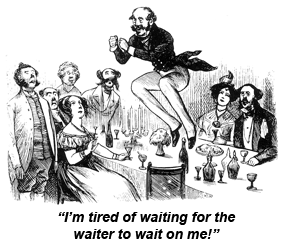
In some dialects it’s common to say that you’re waiting on people or events when in standard English we would say you’re waiting for them. Waiters wait on people, so it’s all right to say “I’m tired of waiting on you hand and foot”; but you shouldn’t say “I’m waiting on you down here at the police station; bring the bail money so I can come home.”

___________
This is the tenth year of the Common Errors in English Usage calendar. To celebrate, we are bringing back some of our favorite interesting, funny, but sometimes merely silly entries through the years before going on hiatus in 2016.

Enjoy the calendar? Buy the book!

Wednesday, July 8, 2015

jerry-built/jury-rigged: Common Errors in English Usage Entry for Wednesday, July 8, 2015

jerry-built/jury-rigged
Although their etymologies are obscure and their meanings overlap, these are two distinct expressions. Something poorly built is “jerry-built.” Something rigged up temporarily in a makeshift manner with materials at hand, often in an ingenious manner, is “jury-rigged.” “Jerry-built” always has a negative connotation, whereas one can be impressed by the cleverness of a jury-rigged solution. Many people cross-pollinate these two expressions and mistakenly say “jerry-rigged” or “jury-built.”


___________
This is the ten-year anniversary of the Common Errors in English Usage calendar. To celebrate, we are bringing back some of our favorite interesting, funny, but sometimes merely silly entries through the years before going on hiatus in 2016.

Enjoy the calendar? Buy the book!