Wednesday, December 5, 2018

Book Sale Continues! Also, Paul Brians in The Washington Post + Scotch free/scot free

Trending now on the Internet is the medieval idiom “scot free,” which Donald Trump spelled out as “Scott Free” in a recent tweet. Meagan Flynn wrote up the whole story at The Washington Post, and in doing so cited Paul Brians’ Common Errors in English Usage, which remains on sale through the end of the year, lest you forget.

You may notice Flynn hyphenates the term (scot-free), while in the book it is not hyphenated. It turns out that there is no clear preference in edited work to hyphenate or not; this is a case where it can go either way. However, if you go by Webster’s, you will find it hyphenated.

Here is the entry from the book:

Scotch free/scot free
Getting away with something “scot free” has nothing to do with the Scots (or Scotch). The scot was a medieval tax; if you evaded paying it you got off scot free. Some people wrongly suppose this phrase alludes to Dred Scott, the American slave who unsuccessfully sued for his freedom. The phrase is “scot free”: no H, one T.


Further down in her article, Flynn notes that Jeremy Fowler of Fowler's Dictionary of Modern English Usage has called this a “special kind of eponym eggcorn,” but when Flynn identifies an eggcorn as “a language error when someone’s usage is close but not quite correct,” she is off the mark. An eggcorn springs from a misunderstanding of the origin of a word or phrase, such as the ubiquitous “for all intensive purposes” in place of “for all intents and purposes,” where the user mishears the phrase and creates a different meaning, in this case believing purposes must somehow be intensive. An error like Trump’s is more like a plain old homonym error, or if you like, a special kind of eponym homonym.

If only Flynn had chosen to cite another book that is on sale this month:

Far from the Madding Gerund and Other Dispatches from Language Log

. . . which features an “eggcorn” right on the cover, and has all the information you would ever need to help you define the term to perfection every time!

__________________________
https://commonerrorspodcast.wordpress.com/
We bid farewell to the podcast some time ago, but you may still listen to all the episodes you may have missed.

Wednesday, November 28, 2018

Book Sale Continues! Also, the Latest Blog Post from Paul Brians + A Couple of Favorites

Paul Brians’ Common Errors in English Usage is on sale through the end of the year—just $15 with free domestic shipping (US). Looking for something a little different? Far from the Madding Gerund is also on sale through the year’s end.

Here are a couple of old favorites from Common Errors in English Usage:

tender hooks/tenterhooks A “tenter” is a canvas-stretcher, and to be “on tenterhooks” means to be as tense with anticipation as a canvas stretched on one.


dolly/handcart
A dolly is a flat platform with wheels on it, often used to make heavy objects mobile or by an auto mechanic lying on one under a car body. Many people mistakenly use this word to designate the vertically oriented, two-wheeled device with upright handles and horizontal lip. This latter device is more properly called a “handcart” or “hand truck.”

 
__________________________

Paul Brians’ most recent blog post takes a whack at “hack.”
__________________________

https://commonerrorspodcast.wordpress.com/
We bid farewell to the podcast some time ago, but we discussed today’s featured cartoons in Episode 114.

Wednesday, November 14, 2018

Book Sale! Also, the Latest Blog Post from Paul Brians + A Couple of Favorites

Paul Brians’ Common Errors in English Usage is on sale through the end of the year—just $15 with free domestic shipping (US). Looking for something a little different? Far from the Madding Gerund is also on sale through the year’s end.

Here are a couple of old favorites from Common Errors in English Usage:

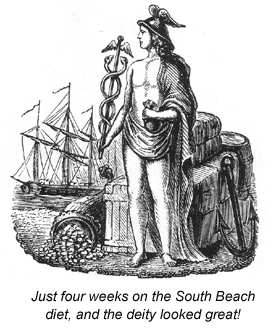
dieties/deities
This one is always good for a laugh. The gods are deities, after the Latin deus, meaning “god.”


scone/sconce
If you fling a jam-covered biscuit at the wall and it sticks, the result may be a “wall scone”; but if you are describing a wall-mounted light fixture, the word you want is sconce.


__________________________

Paul Brians’ most recent blog post muses on various uses for “mac.”
__________________________

https://commonerrorspodcast.wordpress.com/
We bid farewell to the podcast some time ago, but we discussed today’s featured cartoons in Episode 113: Giving Thanks for the Book.

Tuesday, November 6, 2018

Book Sale! Also, the Latest Blog Post from Paul Brians + balogna/baloney

bologna/baloney
“Bologna” is the name of a city in Italy, pronounced “boh-LOAN-ya.” But although in English the sausage named after the city is spelled the same, it is pronounced “buh-LOAN-ee” and is often spelled “baloney.” Either spelling is acceptable for the sliced meat product.

Then there is the expression “a bunch of baloney.” “Baloney” in this case probably originated as a euphemism for “BS.” When it means “nonsense,” the standard spelling is “baloney.” People who write “bunch of bologna” are making a pun or are just being pretentious.


__________________________
Paul Brians’ most recent blog post talks about his appearance in The Huffington Post. Featured prominently in the Huffington Post piece are Mark Liberman and Ben Zimmer, both contributors to the William, James publication, Far from the Madding Gerund. 

That means it’s a good time to put that book and Paul Brians’ Common Errors in English Usage on sale through the end of the year. Each is just $15 with free domestic shipping (US).

https://commonerrorspodcast.wordpress.com/

We bid farewell to the podcast some time ago, but we discussed “balogna/baloney” in Episode 20: What’s on the Menu? (Part 1).

Thursday, September 6, 2018

Paul Brians Two Recent Blog Posts + raise/raze

raise/raze 
To raze a building is to demolish it so thoroughly that it looks like it’s been scraped right off the ground with a razor. To raise a building is just the opposite: to erect it from the ground up.


__________________________

Two recent blog posts by Paul Brians address “rails and walls” and an interesting fact about a suffix in two forms.

https://commonerrorspodcast.wordpress.com/

We bid farewell to the podcast some time ago, but several episodes, starting with Episode 105: Government and Politics—More Than Just Words, covered the language of politics.

Monday, August 13, 2018

New Post: Paul Brians Discusses "Well and Good" + good/well

good/well
You do something well, but a thing is good. The exception is verbs of sensation in phrases such as “the pie smells good,” or “I feel good.” Despite the arguments of nitpickers, this is standard usage. Saying “the pie smells well” would imply that the pastry in question had a nose. Similarly, “I feel well” is also acceptable, especially when discussing health; but it is not the only correct usage.


__________________________

Recycling cartoons from the book is all well and good, but how about we all go read Paul Brians’ latest blog post.

https://commonerrorspodcast.wordpress.com/

We bid farewell to the podcast some time ago, but you can still browse and listen to episodes.