dire straights/dire straits
When you are threading your way through troubles as if you were traversing a dangerously narrow passage, you are in “dire straits.” The expression and the band by that name are often transformed by those who don’t understand the word “strait” into “dire straights.”
___________
This is the tenth year of the Common Errors in English Usage calendar. To celebrate, we are bringing back some of our favorite interesting, funny, but sometimes merely silly entries through the years before going on hiatus in 2016.
Enjoy the calendar? Buy the book!
The home for the Common Errors in English Usage e-calendar
Monday, September 7, 2015
Sunday, September 6, 2015
mischievious/mischievous: Common Errors in English Usage Entry for Sunday, September 6, 2015
mischievious/mischievous
The correct pronunciation of this word is “MISS-chuh-vuss,” not “miss-CHEE-vee-uss.” Don’t let that mischievous extra I sneak into the word.

___________
This is the tenth year of the Common Errors in English Usage calendar. To celebrate, we are bringing back some of our favorite interesting, funny, but sometimes merely silly entries through the years before going on hiatus in 2016.
Enjoy the calendar? Buy the book!
The correct pronunciation of this word is “MISS-chuh-vuss,” not “miss-CHEE-vee-uss.” Don’t let that mischievous extra I sneak into the word.

___________
This is the tenth year of the Common Errors in English Usage calendar. To celebrate, we are bringing back some of our favorite interesting, funny, but sometimes merely silly entries through the years before going on hiatus in 2016.
Enjoy the calendar? Buy the book!
Saturday, September 5, 2015
fortuitous/fortunate: Common Errors in English Usage Entry for Saturday, September 5, 2015
fortuitous/fortunate
“Fortuitous” events happen by chance; they need not be fortunate events, only random ones: “It was purely fortuitous that the meter reader came along five minutes before I returned to my car.” Although fortunate events may be fortuitous, when you mean “lucky,” use “fortunate.”
___________
This is the tenth year of the Common Errors in English Usage calendar. To celebrate, we are bringing back some of our favorite interesting, funny, but sometimes merely silly entries through the years before going on hiatus in 2016.
Enjoy the calendar? Buy the book!
“Fortuitous” events happen by chance; they need not be fortunate events, only random ones: “It was purely fortuitous that the meter reader came along five minutes before I returned to my car.” Although fortunate events may be fortuitous, when you mean “lucky,” use “fortunate.”
___________
This is the tenth year of the Common Errors in English Usage calendar. To celebrate, we are bringing back some of our favorite interesting, funny, but sometimes merely silly entries through the years before going on hiatus in 2016.
Enjoy the calendar? Buy the book!
Friday, September 4, 2015
cowtow/kowtow: Common Errors in English Usage Entry for Friday, September 4, 2015
cowtow/kowtow
You can tow a cow to water, but you can’t make it drink. But the word that means bowing worshipfully before someone comes from the Chinese words for knocking one’s head on the ground, and is spelled “kowtow.”

___________
This is the tenth year of the Common Errors in English Usage calendar. To celebrate, we are bringing back some of our favorite interesting, funny, but sometimes merely silly entries through the years before going on hiatus in 2016.
Enjoy the calendar? Buy the book!
You can tow a cow to water, but you can’t make it drink. But the word that means bowing worshipfully before someone comes from the Chinese words for knocking one’s head on the ground, and is spelled “kowtow.”

___________
This is the tenth year of the Common Errors in English Usage calendar. To celebrate, we are bringing back some of our favorite interesting, funny, but sometimes merely silly entries through the years before going on hiatus in 2016.
Enjoy the calendar? Buy the book!
Thursday, September 3, 2015
hole/whole: Common Errors in English Usage Entry for Thursday, September 3, 2015
hole/whole
“Hole” and “whole” have almost opposite meanings. A hole is a lack of something, like the hole in a doughnut (despite the confusing fact that the little nubbins of fried dough are called “doughnut holes”). “Whole” means things like “entire,”“complete,” and “healthy” and is used in expressions like “the whole thing,” “whole milk,” “whole wheat,” and “with a whole heart.”

___________
This is the tenth year of the Common Errors in English Usage calendar. To celebrate, we are bringing back some of our favorite interesting, funny, but sometimes merely silly entries through the years before going on hiatus in 2016.
Enjoy the calendar? Buy the book!
“Hole” and “whole” have almost opposite meanings. A hole is a lack of something, like the hole in a doughnut (despite the confusing fact that the little nubbins of fried dough are called “doughnut holes”). “Whole” means things like “entire,”“complete,” and “healthy” and is used in expressions like “the whole thing,” “whole milk,” “whole wheat,” and “with a whole heart.”

___________
This is the tenth year of the Common Errors in English Usage calendar. To celebrate, we are bringing back some of our favorite interesting, funny, but sometimes merely silly entries through the years before going on hiatus in 2016.
Enjoy the calendar? Buy the book!
Wednesday, September 2, 2015
done/finished: Common Errors in English Usage Entry for Wednesday, September 2, 2015
done/finished
Some claim “dinner is done; people are finished.” I pronounce this an antiquated distinction rarely observed in modern speech. Nobody really supposes the speaker is saying he or she has been roasted to a turn. In older usage people said, “I have done,” to indicate they had completed an action. “I am done” is not really so very different.

___________
This is the tenth year of the Common Errors in English Usage calendar. To celebrate, we are bringing back some of our favorite interesting, funny, but sometimes merely silly entries through the years before going on hiatus in 2016.
Enjoy the calendar? Buy the book!
Some claim “dinner is done; people are finished.” I pronounce this an antiquated distinction rarely observed in modern speech. Nobody really supposes the speaker is saying he or she has been roasted to a turn. In older usage people said, “I have done,” to indicate they had completed an action. “I am done” is not really so very different.

___________
This is the tenth year of the Common Errors in English Usage calendar. To celebrate, we are bringing back some of our favorite interesting, funny, but sometimes merely silly entries through the years before going on hiatus in 2016.
Enjoy the calendar? Buy the book!
Tuesday, September 1, 2015
disgression/discretion: Common Errors in English Usage Entry for Tuesday, September 1, 2015
disgression/discretion
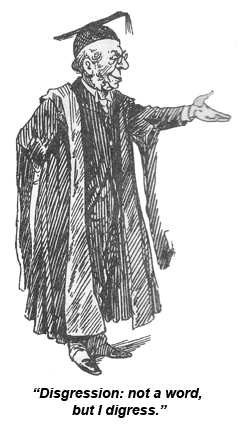
Discretion has to do with being discreet or with making choices. A lot of people hear it and get influenced by the quite different word “digression” which is used to label instances of people wandering off the point. The result is the nonword “disgression.” The expression is “you can do it at your own discretion.”
Also wrong but less common—and pretty funny—is “at your own desecration.”

___________
This is the tenth year of the Common Errors in English Usage calendar. To celebrate, we are bringing back some of our favorite interesting, funny, but sometimes merely silly entries through the years before going on hiatus in 2016.
Enjoy the calendar? Buy the book!
Discretion has to do with being discreet or with making choices. A lot of people hear it and get influenced by the quite different word “digression” which is used to label instances of people wandering off the point. The result is the nonword “disgression.” The expression is “you can do it at your own discretion.”
Also wrong but less common—and pretty funny—is “at your own desecration.”

___________
This is the tenth year of the Common Errors in English Usage calendar. To celebrate, we are bringing back some of our favorite interesting, funny, but sometimes merely silly entries through the years before going on hiatus in 2016.
Enjoy the calendar? Buy the book!
Subscribe to:
Posts (Atom)

